
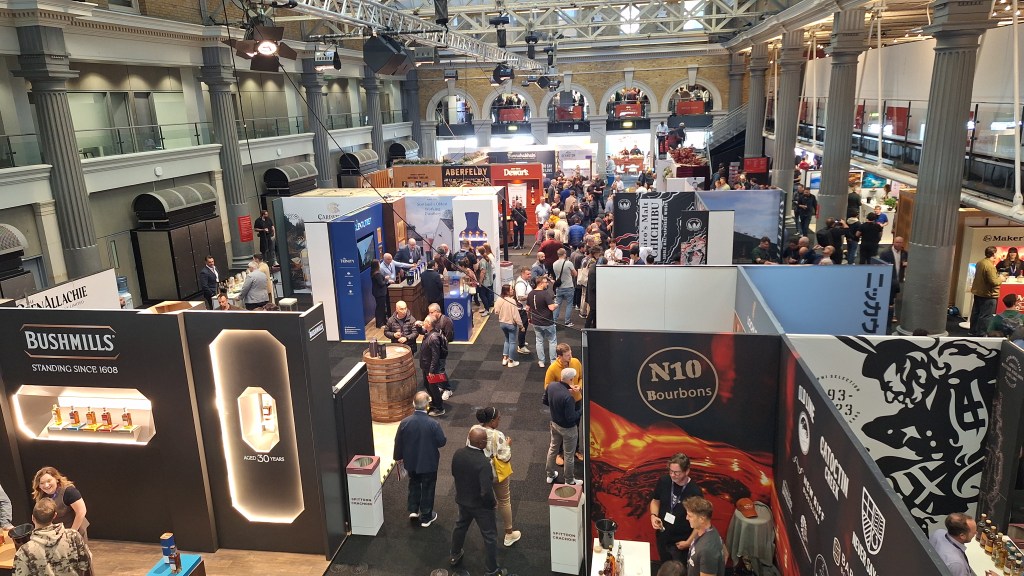
In the closing moments of this year’s Whisky Show, as bottles were being sequestered from tables, Richard Foster, organiser of our 2024 top festival hit me with his view on what we’d just experienced:
“This is whisky Disneyland and every other festival is your local theme park.”
He has a point. There is a unique challenge in reviewing a festival that is so much larger than anything else. You can probably get on most of the rides at your local theme park in a day, but the Whisky Show, like Disneyland, has more than you can see in an entire three-day weekend. If you were to try all 1100 drams on show (assuming an average ABV of 46% and 10ml pours) you would be 36 times over the NHS’s weekly recommendation. You’d be dead too, so you’d have missed out on all the talks, education, socializing and festival swag that make this show so fun.
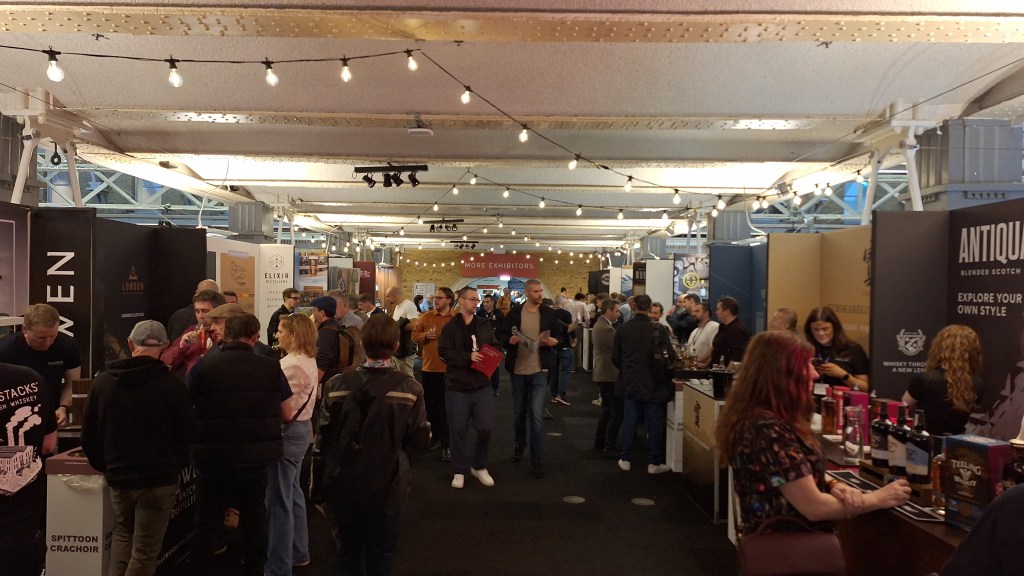
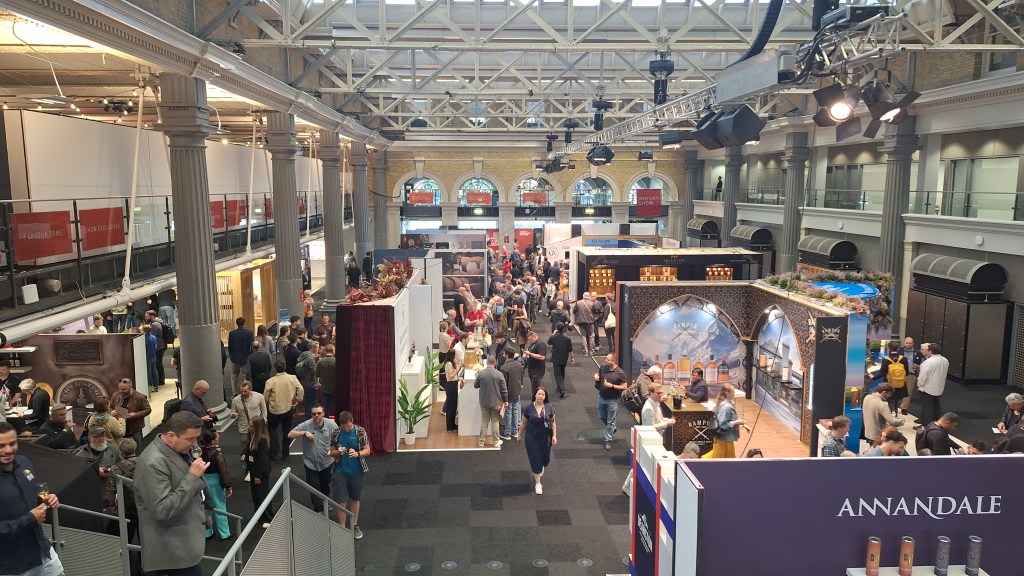
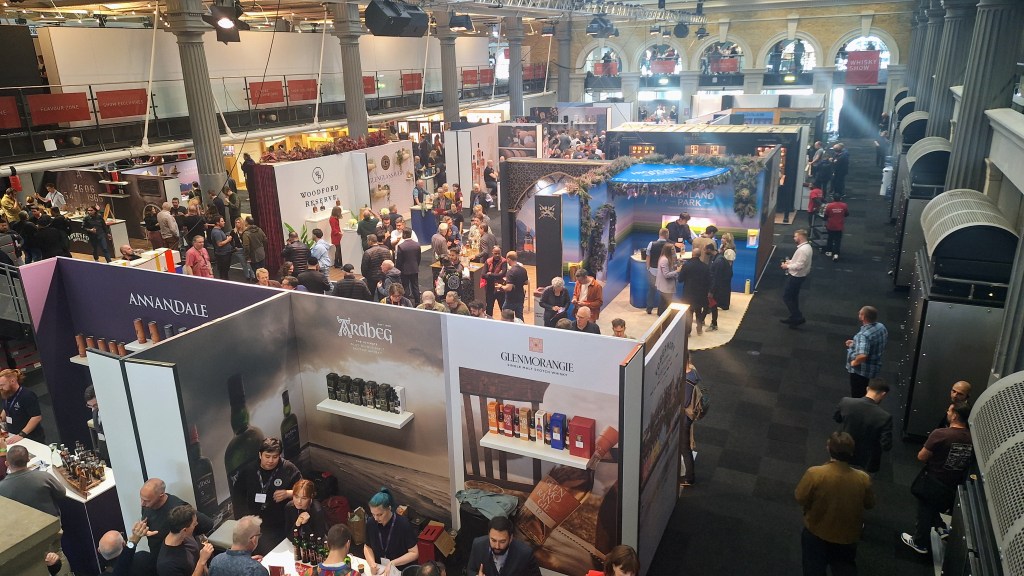
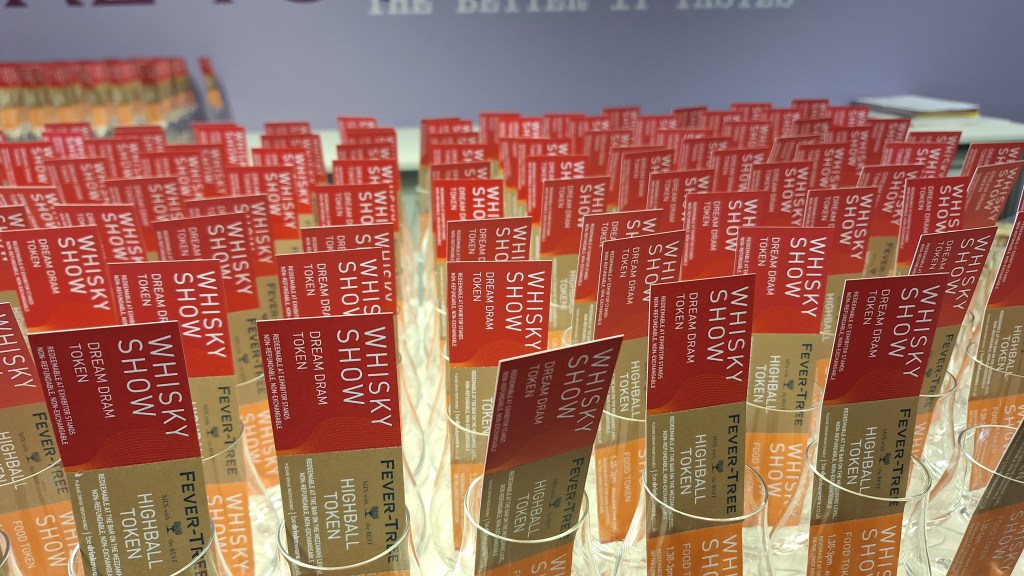
With this scale in mind we’re taking a different approach here. I’ll tell you all why I love the show and what it means to me as a whisky fan. But I’ll also tell you the big highs (and little lows) of such a large show, and why a smaller one might still be more up your street.
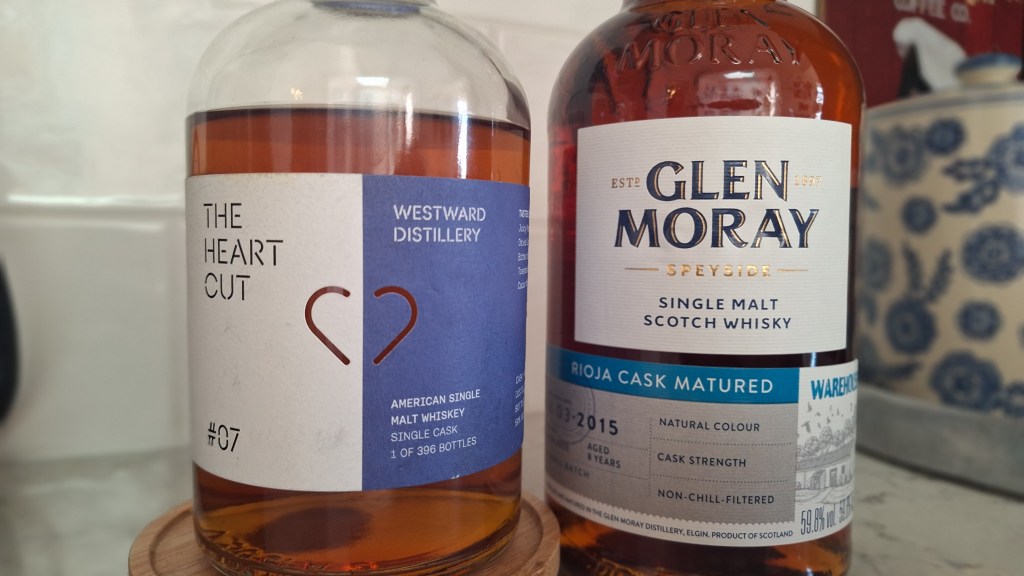
The Whisky Show 2021 was my first ever whisky festival and I had the most incredible time. I broadened my horizons and fell in love with two very different whiskies, Westward American Single Malt and the Octomore series. The latter I tried at 2PM, far too early in the show, and wrecked my novice palate for the rest of the day. I went back the next year better prepared and then – boom – here’s All But Drams.
To say I have high expectations for this show going in after a couple of year away is an understatement. When All But Drams rocks up to fledgling shows like The World Whisky Experience or budget ones like Harrow we are more willing to forgive foibles versus a show that’s been around for well over a decade and is charging £178 per person for an Early Bird set of Fri & Sat tickets.
Each year The Whisky Show begins with a miniature test of endurance. There’s a lot of eager fans awaiting the halls of delicious whisky and the queue for the show feels longer than before, even with good whisky conversation and sneaky queue tipples. One question I see asked a lot is “when you should arrive?”
An hour before, at open, or after? It’s hard to judge.
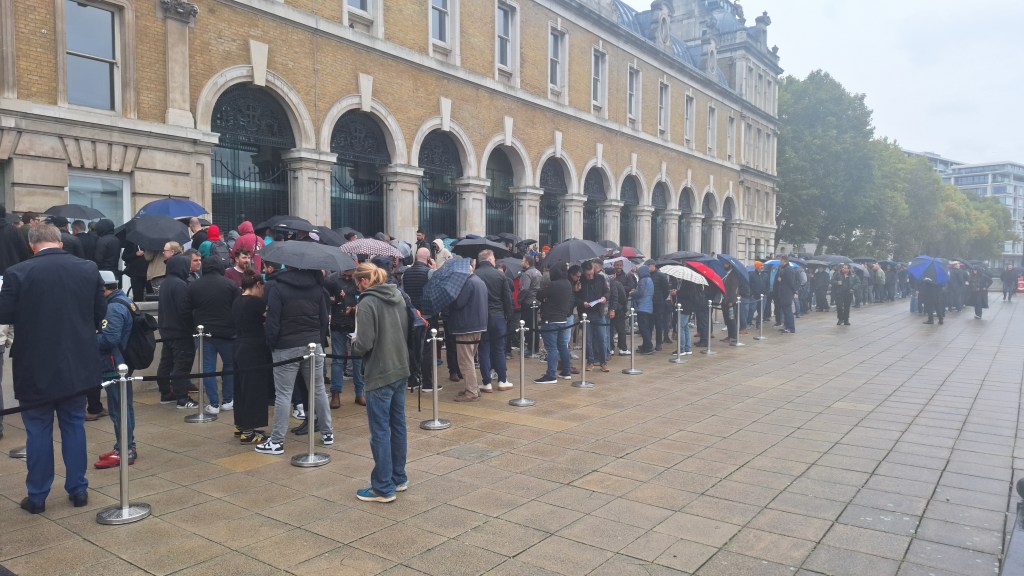
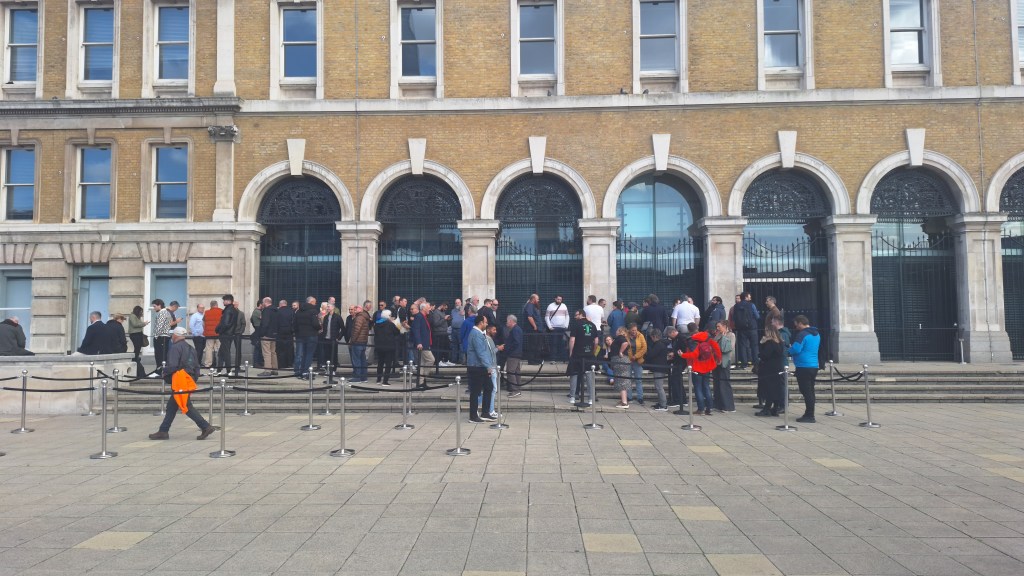
On Friday I arrived 30 minutes before open to find a huge queue in front of me. It was wet and miserable and as a result all the ticket scanning was being done inside. I wasn’t inside with a dram in hand until 15 minutes after opening. Given how far back the queue stretched I suspect it would be a good while longer before everyone was inside. So on that day, arriving early would have saved a lot of time. By contrast on Sunday I arrived 40 minutes before to find a much shorter queue which didn’t increase much as I watched it for a while. On the Sunday the team came down the line and scanned tickets in advance so I had a dram in hand in about 3 minutes! The queue behind me looked smaller too. Our advice on this? Just don’t worry. Plan ahead what you want to drink and save time that way.
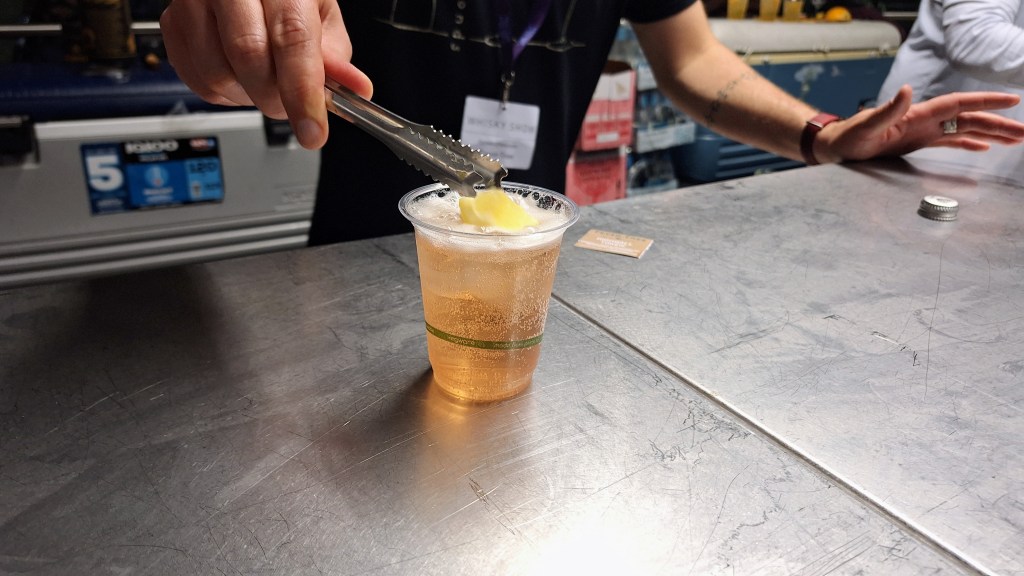
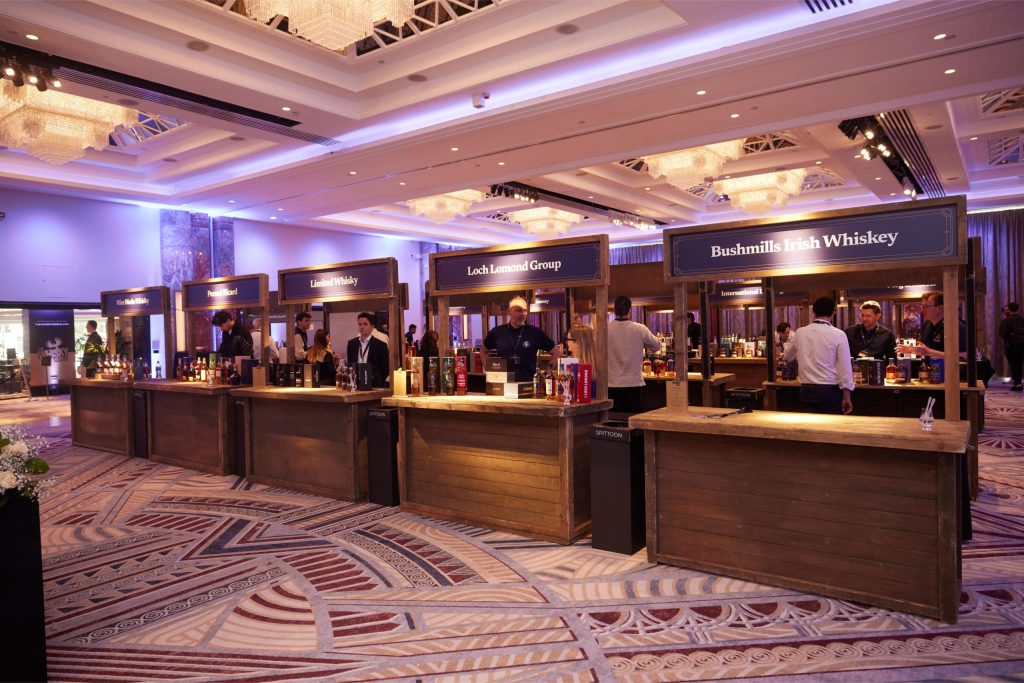
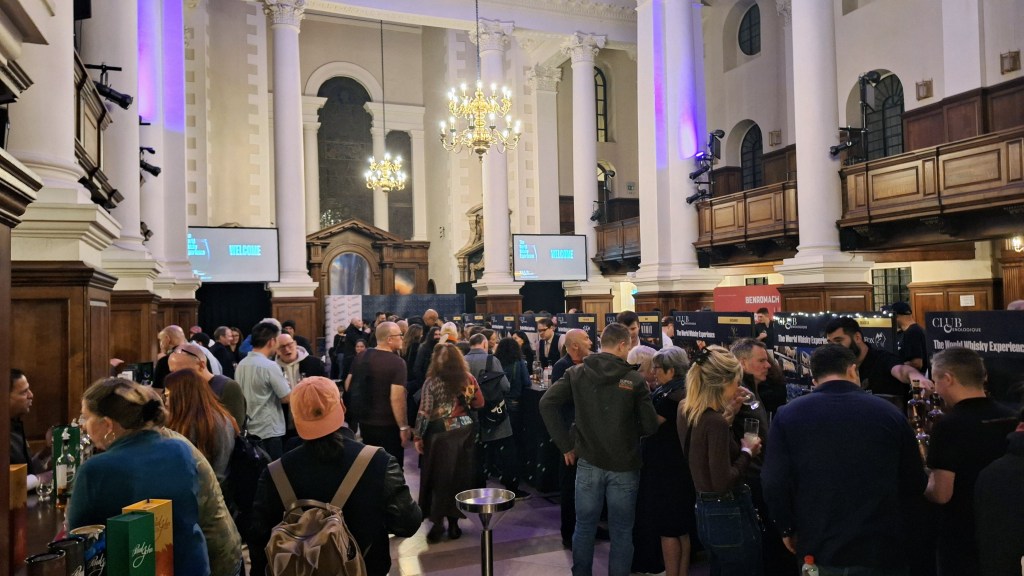
Once you’re inside wide avenues amid giant stands will greet you. There’s been some serious investment in recent years in experiential marketing by brands of all sizes. As a result this show is no longer just the largest gathering of roller banners or printed walls, it’s the Disneyland of whisky it’s supposed to be with each brand trying to carve out their own style to get your attention. There’s over 100 stands to visit spread out across two floors. Bigger brands generally have the lion’s share of space downstairs and upstairs is a long hallway of smaller stands lit with yellowish bulbs to give it the same vibe as many a whisky bar. Old Billingsgate really is the right venue for a show of this size. It’s well lit and not stuffy. Even with a sold out audience it didn’t get too hot or too loud to hear. Bonus points for its good accessibility too. Crowds will form around chokepoints and popular stands, but it’s rarely too much, and I didn’t get bumped or jostled over my two days. The highball bar represented a pleasant breakout area too with friendly staff pouring little cocktails. I had the sweet option of Johnnie Walker Ruby with raspberry and rose lemonade and was impressed by how well the flavours worked. I’ll likely be experimenting with my sherry bombs and rose flavoured mixers at home soon.
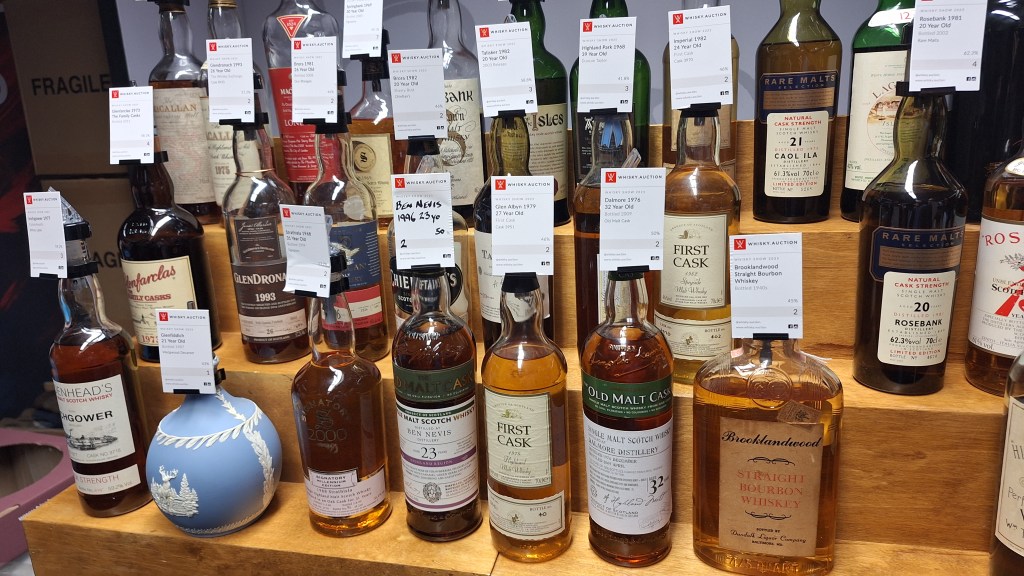
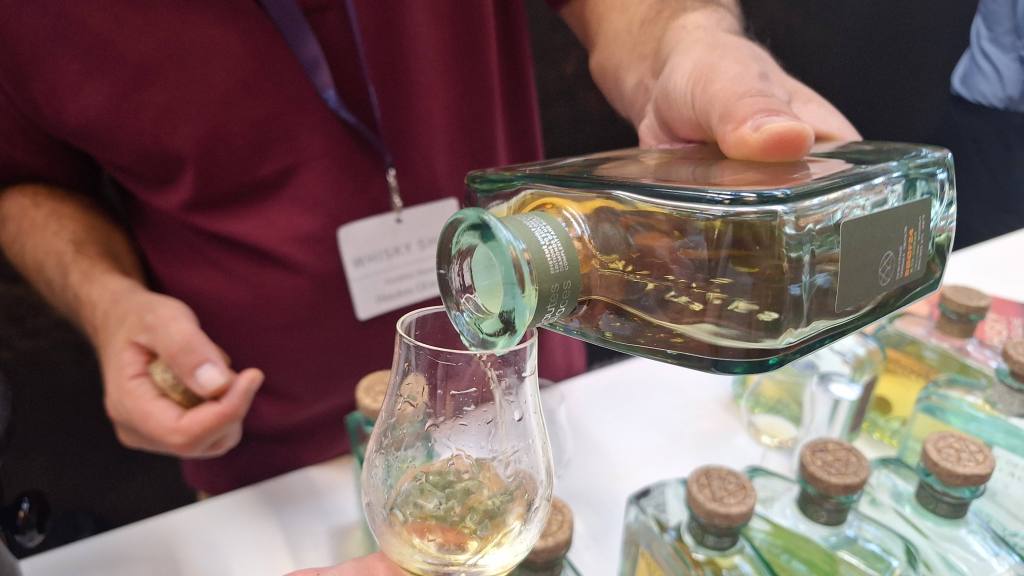
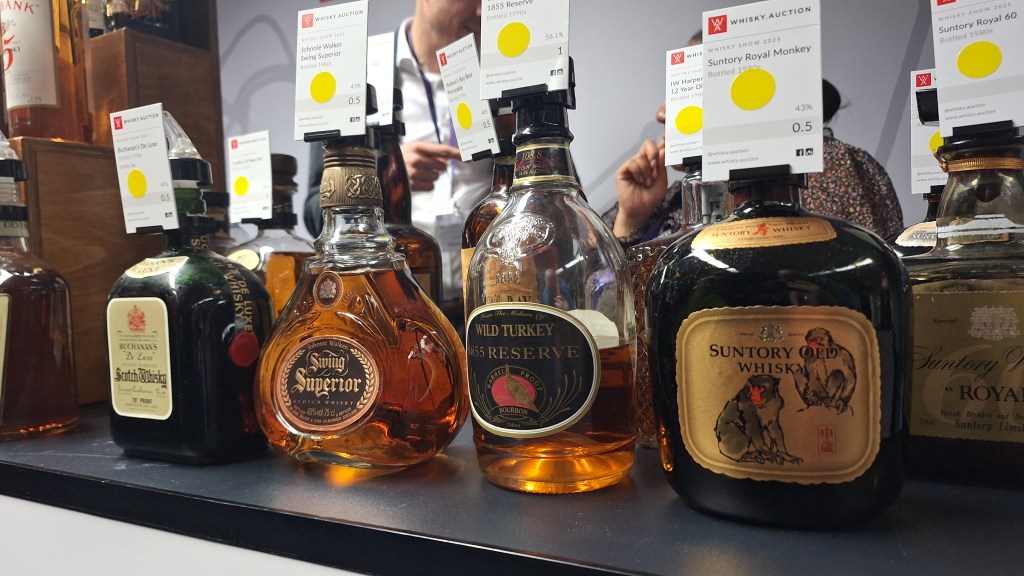
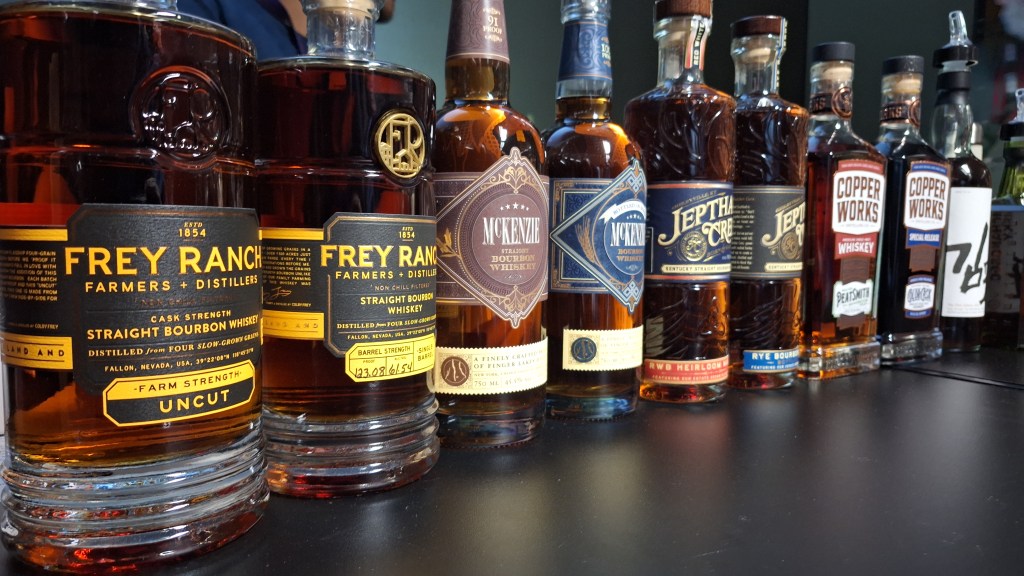
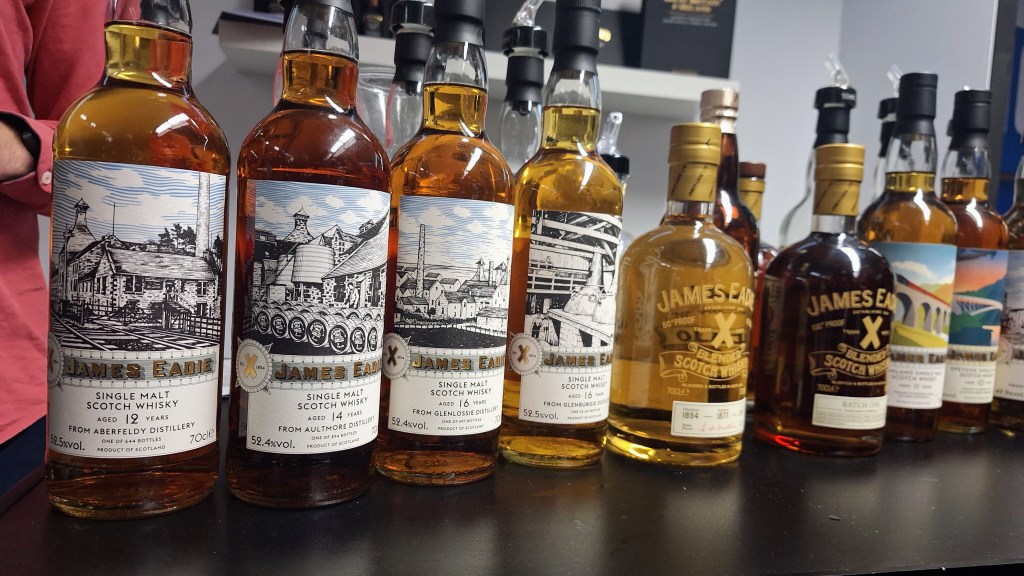
In terms of the whisky on display you really cannot get a better selection. There is more than anyone can realistically drink regardless of their preferred style. Only drink bourbon and rye? No worries, there’s plenty of American brands and distributors. Need every whisky to be peaty and maritime? Whisky Show has got you covered, the entirety of Islay is here! With smaller shows we try to break the exhibitor list down and see if there are any sectors with poor value for money, but that just isn’t the case here. For me personally I got to try both new and familiar brands across all my favourite categories like sherry bombs, bourbons and older single grain. However, what impressed me most wasn’t trying new releases in categories I already like, but deep-diving into a new category entirely.
This year The Whisky Exchange used their show to platform an emergent, but by no means nascent, category: Nordic Whisky. Twelve distilleries were clustered together downstairs in their own zone and it was here that adventurous whisky fans could experience what I believe were the most unique products at the show.
Copenhagen Distillery was the most talked about distillery at the show among the folks I know who are drawn to the novel and the strange. Their core range of malted barley and spelt whiskies in virgin Hungarian oak are interesting enough but under the counter was the unhinged. I tried their Negroni Whisky where a cask of the cocktail was left for a year before being emptied and filled with new make. The resulting whisky after three years was like someone had distilled a cola. It wasn’t a whisky, but it wasn’t a herbal liqueur either. That experience was followed by the controversial Blood & Bone. This whisky was aged in a cask that previously held a herbal liqueur distilled with blood and bones of a roe deer alongside botanicals.
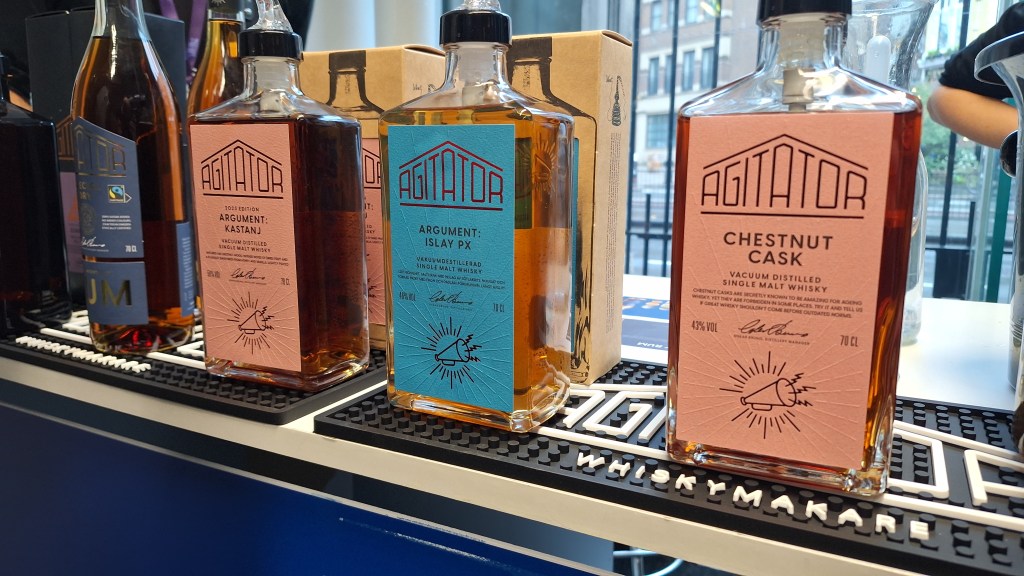
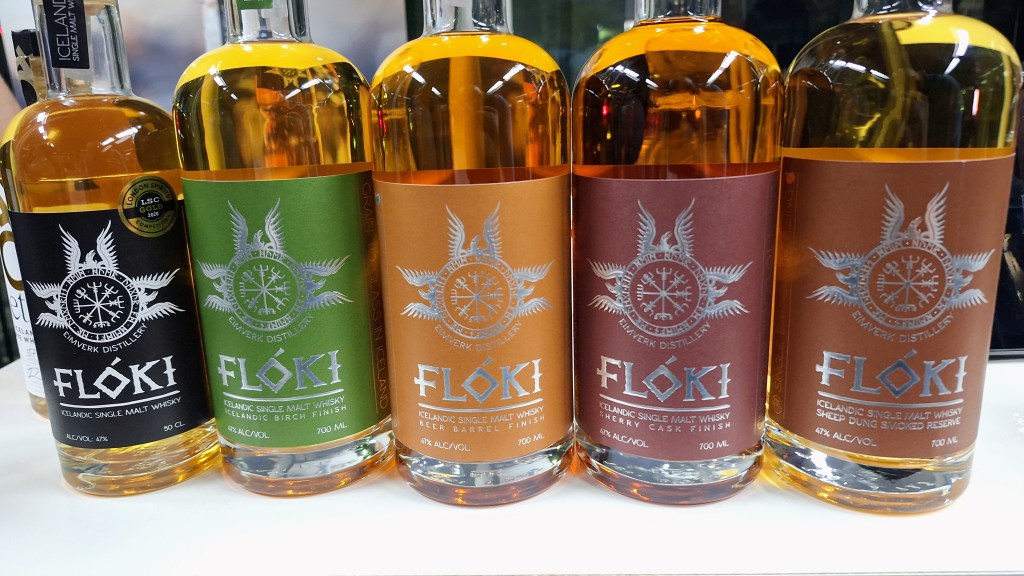
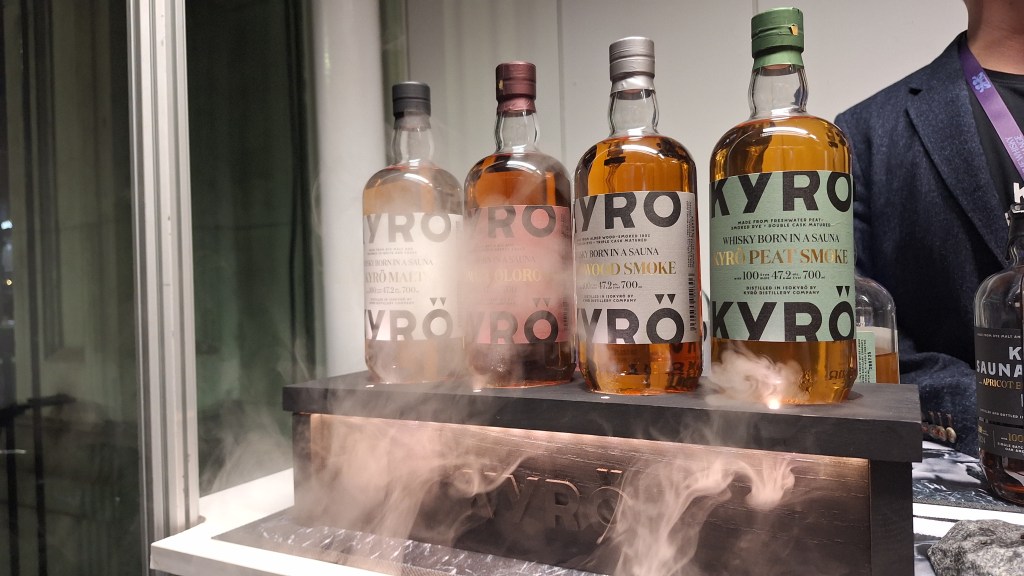
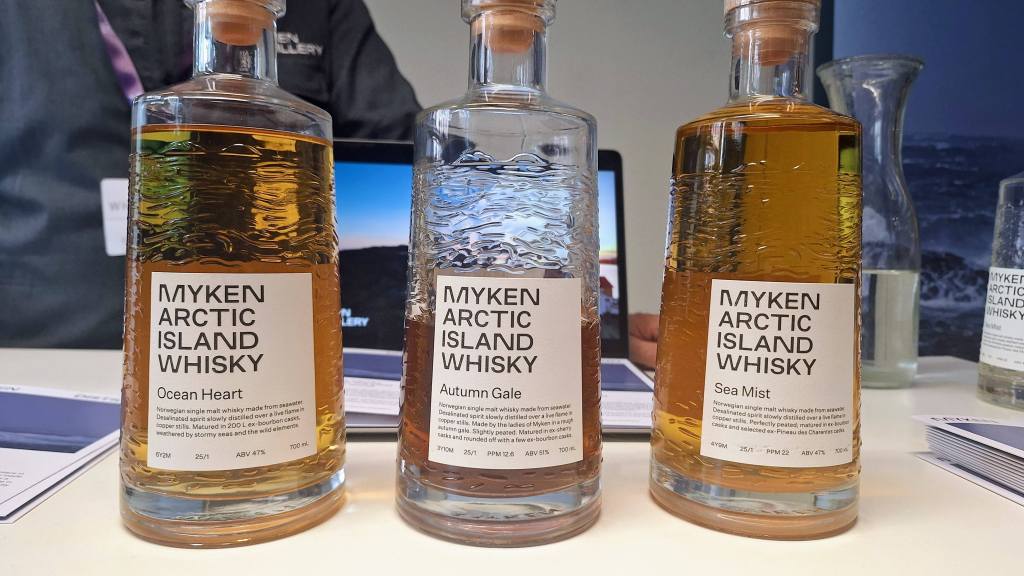
For those with a different definition of ‘adventurous’ there are brands like Agitator who are using casks like chestnut and experimenting with vaccum distillation. Eimverk from Iceland are also experimenting with casks, I was really impressed by their birch cask as that’s a wood, like chestnut, that Scottish and other whiskymakers cannot use. The birch lent grass and sap notes to an otherwise cereal heavy grain. The nose was like a fresh forest surprise even if the palate was more what I expected. I ended up buying a bottle from Eimverk of their sheep dung smoked whisky as it’s a real talking point and now available in the UK. I’m always eager to try peat alternatives and sheep dung is making use of what they have to hand and bringing a powerful vegetal hit of smoke beyond any Islay I’ve tried.
Anyone not up for having sheep poo in their whisky should check out Thy for a different approach to smoke. Whilst they aren’t the first to use woodsmoke their new make was like liquid bacon that I couldn’t get enough of. The finished products were right up my alley too with a heavily sherried option and a dry, spicier, spelt and rye whisky in American oak.
To cover all the interesting Nordic whiskies would take this review’s wordcount to painful extremes. The bottom line is I would pay The Whisky Show good money to see all these Nordic Zone brands again, here or at their own show. It was truly the highlight of a festival already full of delights.


So what are the issues with The Whisky Show? Well they’re all nitpicks that may sit outside the control of the Whisky Exchange or the brands attending, but they are worth exploring regardless.
First up, the included food is a mixed bag. That’s what I’ve experienced before and heard from others. This year, on Friday, I asked the staff if they had a lot of the vegan option in stock as I fancied something different but didn’t want to pinch portions set aside for anyone with dietary requirements. They had plenty left so I tucked into the Mooless Moo pie. I am pleased to report it really hit the spot. Rich and with a great texture in both the crust and filling, black pepper and ale gravy is a combo you can’t really get wrong. I was excited to try the spinach and chickpea coconut curry on Sunday. However, there had clearly been a last minute menu change as what I got was a huge piece of cauliflower in a bland sauce that had no flavour other than ‘mild spice’. On the side was some limp courgette slices and sad potatoes that looked boiled to death. I ended up binning it and having a sausage roll upstairs instead.
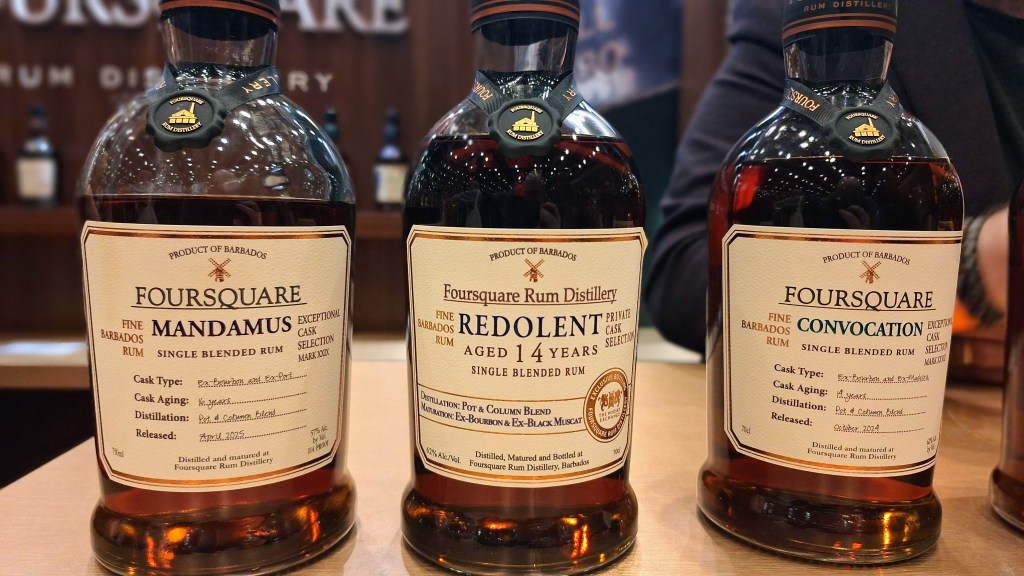
Some problems are caused by the show choosing to go above and beyond for their guests. Publishing a dram list in advance allows us whisky enthusiasts to plan what we want to try and is an essential resource, but one that most other shows forgo entirely. Editing this list is a herculean task and mistakes do happen. One product I wanted to try was on the list as a normal dram, but the staff behind the counter had it priced at two dream dram tokens. Oh well, it’s their product, and I got access to many rare bottles without needing a token at the show. A little confusion is a fair price to pay for the privilege of a detailed dram list though I did see others get upset at having to pay unexpectedly. This desire to keep us informed also means the website gets messy with some sections not getting updated, others linking to the wrong year’s information and sometimes the entire exhibitor list going walkies for a few days in the run up to the show.
Around 10 minutes before the last pour (40 minutes before the official end time), the upstairs of the festival was shut without warning by security. This meant that if you wanted to end the show with a last pour from upstairs, you had to be there in advance or miss out. Other festivalgoers told me they were also ushered out of the show unexpectedly before the end after visiting the cloakroom. I understand these were both sorts of crowd control measures, and know these events full of alcohol can be tough to manage, but it really soured the end of an otherwise lovely show.
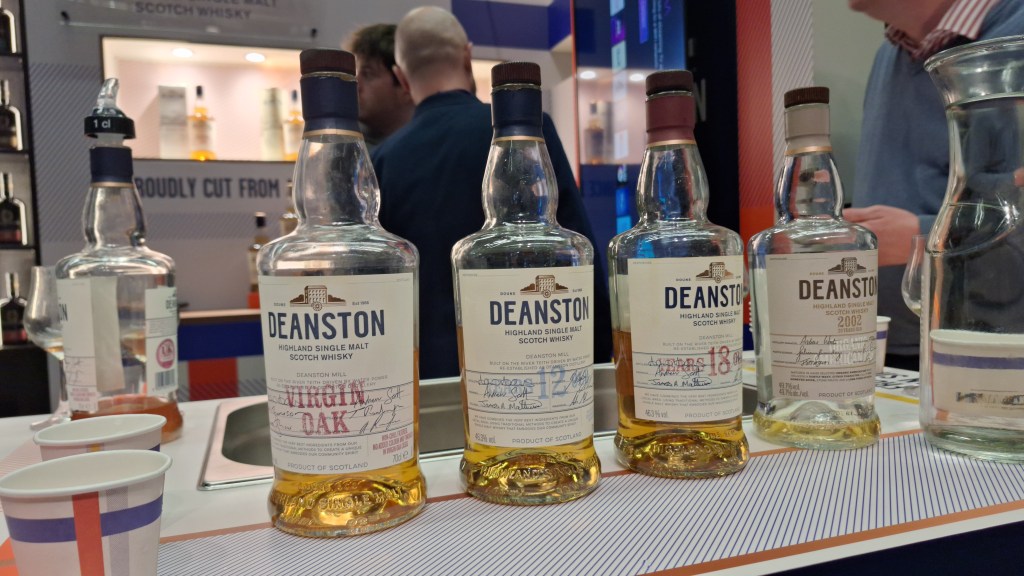
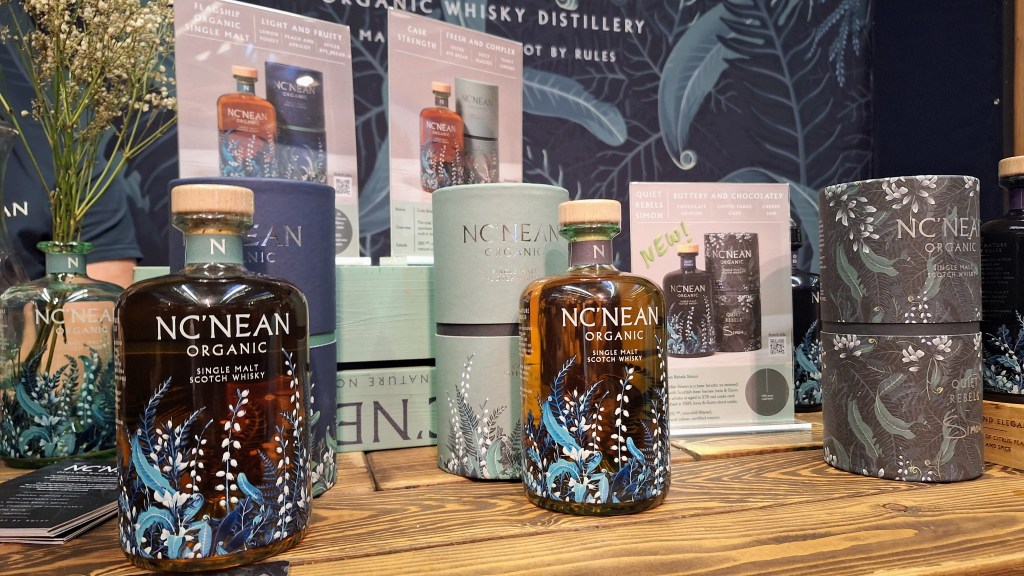
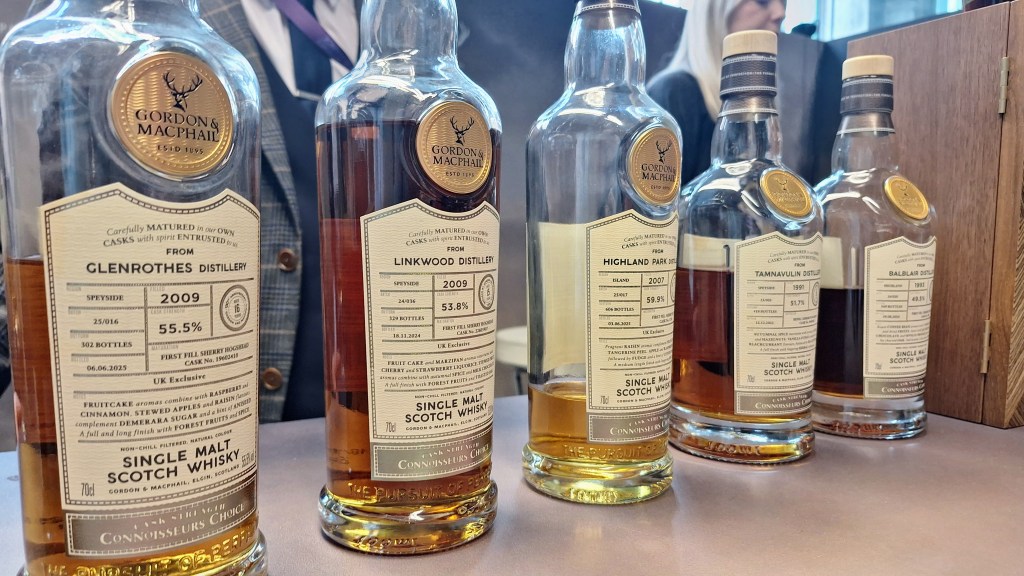
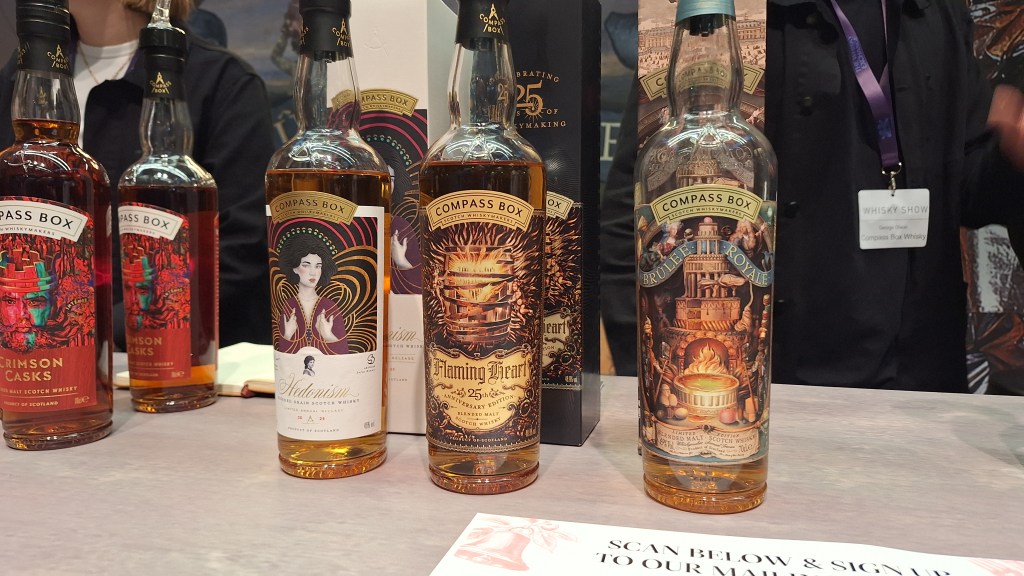
This year was the first year I attended the show on a Sunday and I’d happily do it again. Whilst there’s no cost saving on Sunday, it is much easier to get a ticket as people are either worried about missing out on drams or don’t want to go to work with a hangover. I can say now that unless you are a hardcore enthusiast, you miss out by going on Sunday. On my Sunday trip only one bottle I was interested in had run out and that’s because they were told they’d get more and it didn’t materialise. Almost all stands will manage their inventory to ensure they have enough for three days. The exception is the dream drams, popular ones in that category can and do run out on the first day.
The only barrier to recommending The Whisky Show to anyone is the price tag. For those in the know the cost is a no-brainer. Tickets start at £76.50 for a Friday Early Bird and go up to £285 for a full price three day option. It’s a big stack of cash to put down for many of us but the equivalent cost of trying the same whiskies in a bar would be far higher. You can see big shows like this as an insurance policy. Instead of splashing out on bottles, wait for this show and see if they’re actually worth the money. If you are cash strapped and want a day out in London at a whisky festival then our 2024 favourite, Croydon Whisky Festival, sells its Early Birds for under £30 at the time of writing. Harrow Whisky Festival is even cheaper. Both of these shows are great if you’re on a budget, but they are less than 20% the size of The Whisky Show.
The Whisky show is the festival that got me into whisky properly. However, it wasn’t perfect back then. At times I was made to feel judged for not knowing things, criticized for using spittoons. At several points during my first visits to The Whisky Show I was completely ignored on stands because I clearly wasn’t enough of an enthusiast. I cannot say if this is still the case for newcomers as I’m in a very different position now. By contrast at smaller shows when I was starting out I was never made to feel this way. If you are a beginner, a smaller show may be better for you to get to grips with whisky. The organizers understand this too, and have their own show to fill that niche.
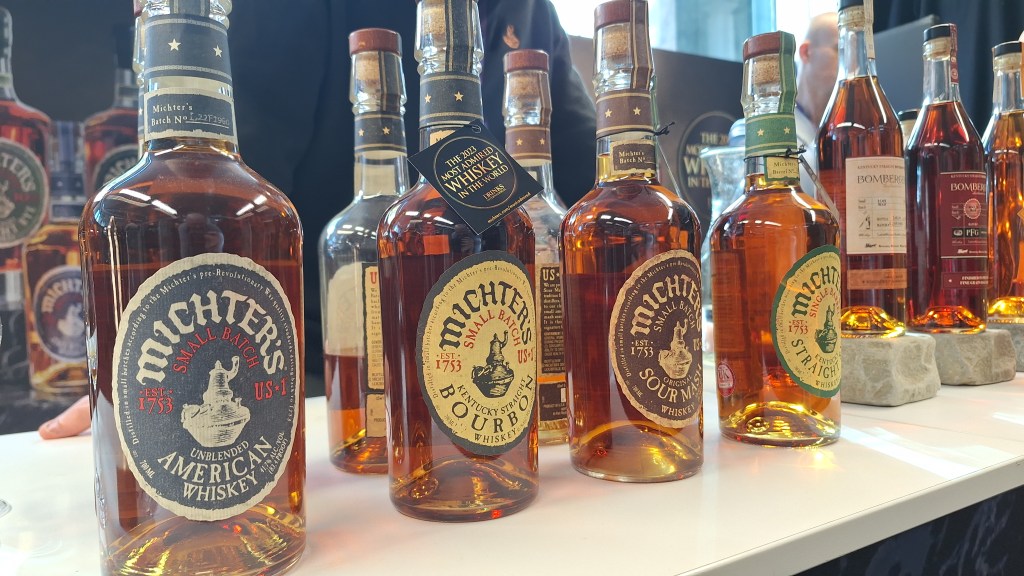
I want to close out this monster review with some comments about how All But Drams aims to be going forward. The Whisky Show is not cheap to exhibit at, that’s what the brands tell me. It sits in a heavyweight class of its own with a huge audience and that’s worth enough to the industry to fill the room, even in these turbulent times. So whilst we wholeheartedly recommend the festival to anyone who is interested we’re going to keep our focus on smaller shows that can offer fledgling distilleries and new independent bottlers a platform at affordable costs. There’s some serious magic in the scrappy indie festivals dotted up and down the country and All But Drams is the place to find out if these (and the big ones) are worth the money.

 All But Drams
Leave a comment